.svg)

SBTi-Aligned Baselining
Build a foundation your targets can actually stand on. SBTi-aligned baselining isn't just carbon accounting - it's the process of calculating your emissions in line with the Science Based Targets initiative and the GHG Protocol, so your numbers are comprehensive, auditable, and ready for validation.
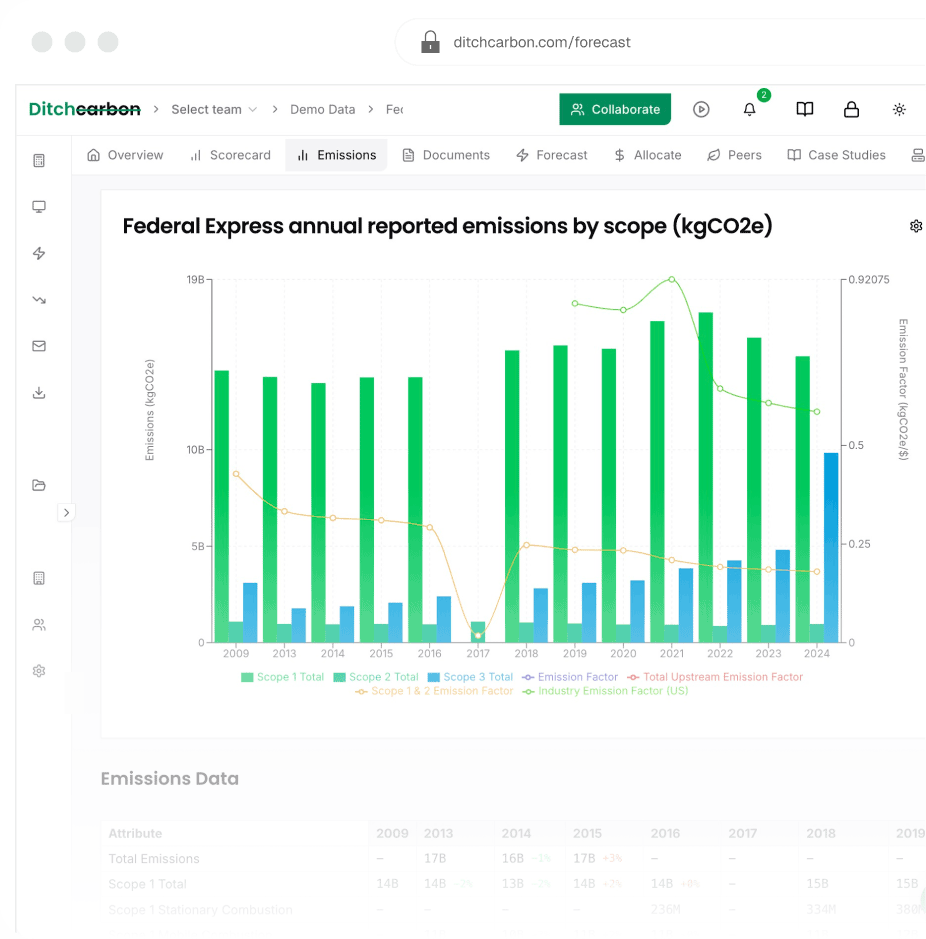

Set science-based targets with real credibility

Find the emission hotspots worth acting on

Meet disclosure expectations that are now table stakes

Protect against greenwashing accusations

Build stakeholder trust vague pledges never will
Explore this
use case
Build a emissions baseline your science-based targets can actually stand on.
Here's the hard truth about baselining
It's the step most companies underestimate - and the one that derails more climate programmes than any other.
You're dealing with data scattered across dozens of suppliers, none of it standardised. Scope 3 emissions, often 70–90% of a company's footprint, depend on information that's difficult to collect, harder to verify, and easy to get wrong. Teams across regions are using different methodologies. And somewhere in the background, someone is trying to do this manually, in spreadsheets, while also doing their actual job.
The result? Baselines that are incomplete, inconsistent, and impossible to audit. Targets built on averages that don't reflect your actual supply chain. And a growing exposure as reporting standards tighten.
This is the problem DitchCarbon was built to solve.
How DitchCarbon turns baselining from a bottleneck into a breakthrough
1. Automated emissions calculation
Stop stitching together spreadsheets. DitchCarbon maps your data directly to GHG Protocol categories and calculates Scope 1, 2, and 3 emissions at scale - using robust, up-to-date emission factors and methodologies built for SBTi alignment.
2. Supplier-specific Scope 3 data
Industry averages will only take you so far. DitchCarbon helps you collect primary emissions data directly from your suppliers - moving you from estimates toward the kind of accuracy that makes your baseline genuinely defensible.
3. Audit-ready from day one
Built-in validation, data completeness tracking, and transparent methodologies mean you're not scrambling when someone asks to see your working. Your baseline is export-ready for internal review, external disclosure, and SBTi submission.
4. Hotspot identification
Not all emissions are created equal. DitchCarbon pinpoints exactly where your biggest sources are, so you can stop spreading effort thinly and start directing resources at the reductions that actually move the needle.
5. A baseline that improves over time
Your first baseline won't be perfect - and it doesn't need to be. SBTi expects continuous improvement. DitchCarbon is built for that journey: tracking data quality gains, helping you transition from spend-based to activity-based data, and evolving as your business does.
Rebaseline to stay credible to your customers
When companies don't update their baselines as better data becomes available, they risk more than just inaccuracy. Regulatory bodies are increasingly scrutinising the quality of emissions reporting, not just whether it exists. SBTi can reject or revoke targets if the underlying data doesn't hold up. Investors and shareholders are getting sophisticated enough to spot the difference between a robust baseline and one that's been left to go stale. And customers who've been promised progress want to see it measured honestly.
Related articles


Frequently asked questions
Get answers to the questions procurement and sustainability teams ask most often.
A carbon footprint is a general estimate. An SBTi-aligned baseline follows the strict methodology of the GHG Protocol and is built specifically to support science-based target setting and validation - it's a different standard, with a different purpose.
No. You can start with spend-based or industry-average data. But the clock is ticking on that approach - improving toward supplier-specific, primary data is essential as SBTi expectations tighten.
Without the right tools, months. With DitchCarbon, companies build an initial baseline in weeks - and improve it continuously from there.
If Scope 3 represents more than 40% of your total footprint - which it does for most companies - yes. You're required to set Scope 3 targets. That makes getting this right non-negotiable.
SBTi doesn't demand perfection on day one. It demands transparency, consistency, and a credible path toward better data. That's exactly what DitchCarbon supports.
Yes. Audit-ready data, documented methodologies, and reporting outputs built for the SBTi process - it's all there.
Most carbon tools give you a number. DitchCarbon gives you a defensible one - built on supplier engagement and primary data collection, not just averages.
Join the industry leaders and solve your Scope 3 emissions data challenge
See how DitchCarbon can transform your sustainability journey with auditable insights and verified data.