.svg)
Regional Playbook: The 10 Most-Used Scope 3 Databases for UK, EU, US & APAC
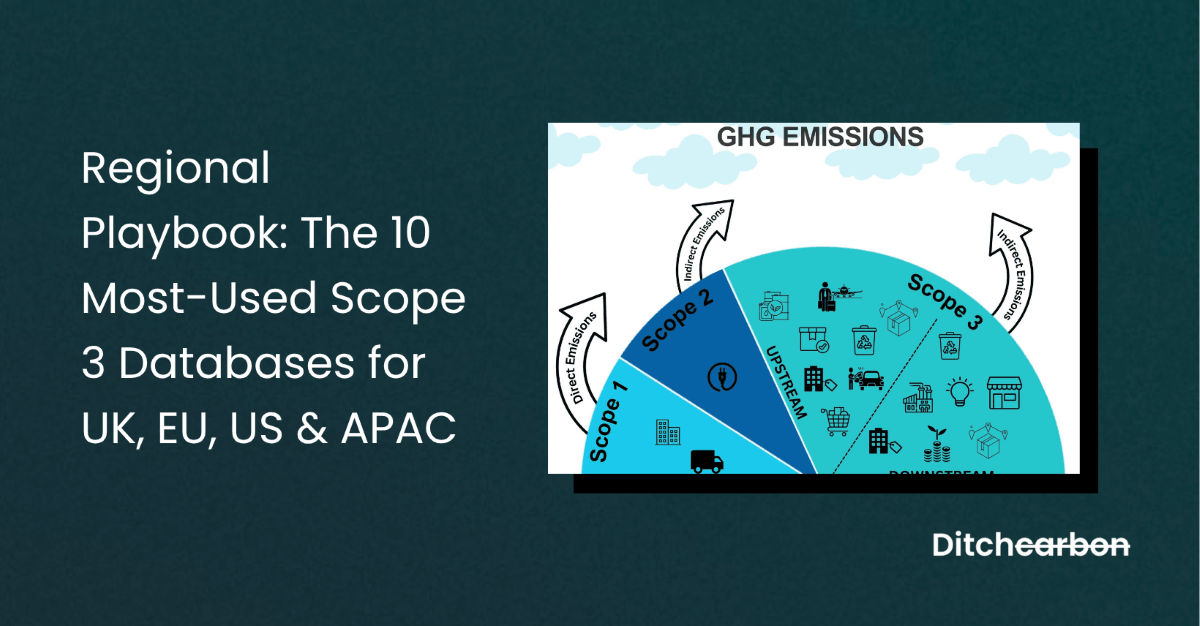
This playbook shows which emission factor sources work best by region and how to combine them. It also explains where DitchCarbon fits to deliver accuracy from supplier-specific (primary) data across global supply bases.
The Short List (Covered Here)
- UK DESNZ/Defra, US EPA (WARM/USEEIO), DitchCarbon, ecoinvent, GLEC (Smart Freight Centre), EU EF/PEF, ADEME Base Carbone, ICAO, Sphera/GaBi, ANZ national factors (NZ MfE + AU NGA)
UK & Ireland
- Baseline factors: UK DESNZ/Defra for travel, freight, waste, upstream fuels
- Logistics: GLEC for road/air/sea/rail (activity based)
- Product LCI: ecoinvent or Sphera/GaBi; consider EF/PEF for EU customers
- Supplier specific overlay: DitchCarbon to map spend/activity to vendor/SKU factors
- Business travel/air cargo: ICAO methodology
Why this works: Auditor familiar corporate coverage, standardised logistics, product depth where needed, and supplier level action via DitchCarbon.
European Union
- Baseline factors: ADEME Base Carbone (France), EF/PEF datasets where available
- Logistics: GLEC; increasingly aligned with ISO 14083
- Product LCI: ecoinvent / Sphera/GaBi alongside EF/PEF
- Supplier specific overlay: DitchCarbon to bridge PEF asks to real suppliers/SKUs
- Business travel/air cargo: ICAO
Why this works: EU aligned footprints and PEF readiness, with LCI depth and supplier specific engagement.
United States
- Baseline factors: US EPA USEEIO (spend) and WARM (waste scenarios)
- Logistics: GLEC for common methods across carriers
- Product LCI: ecoinvent / Sphera/GaBi
- Supplier specific overlay: DitchCarbon to move from US averages to supplier reality
- Business travel/air cargo: ICAO
Why this works: Broad US coverage plus a route to actionable supplier programmes and material negotiations.
Australia & New Zealand (ANZ)
- Baseline factors: NZ MfE and Australia NGA (DCCEEW)
- Logistics: GLEC; align partners on activity data (primary data)
- Product LCI: ecoinvent / Sphera/GaBi
- Supplier specific overlay: DitchCarbon to map local spend to supplier level EFs
- Business travel/air cargo: ICAO
Why this works: Official regional factors with logistics standardisation and supplier level specificity.
Global Overlay (Works Everywhere)
- Supplier specific: DitchCarbon for vendor/SKU level Scope 3
- Logistics methodology: GLEC
- Aviation: ICAO
- Product LCI: ecoinvent or Sphera/GaBi
- Corporate coverage: National sets where you operate (Defra, EPA/USEEIO, ADEME/EF, ANZ)
Side by Side: Regional Stacks
Pros & Cons (the Same 10, Regional Lens)
DESNZ/Defra (UK)
Pros: Wide Scope 3 coverage; auditor friendly; annual updates.Cons: UK averages; not product LCI.
EPA (US: USEEIO + WARM)
Pros: Screening breadth + waste decisions; free.Cons: US centric; averages.
DitchCarbon (Global, Supplier Specific)
Pros: Vendor/SKU level factors; procurement workflows; prioritisation and measurable reduction.Cons: Commercial; needs supplier/integration depth.
ecoinvent (Global LCI)
Pros: Product/process depth; recognised by LCA practitioners.Cons: Paid; complexity.
GLEC (Global Logistics)
Pros: Methodology for all modes; aligns carriers.Cons: Needs activity data.
EF/PEF (EU)
Pros: EU aligned product footprints; supports PEF asks.Cons: Coverage varies by category.
ADEME Base Carbone (France/EU)
Pros: Public; frequently updated.Cons: Localised assumptions.
ICAO (Global Aviation)
Pros: Recognised method for flight emissions.Cons: Non CO₂ often added separately.
Sphera/GaBi (Global LCI, Commercial)
Pros: Industrial depth; strong tooling.Cons: Cost; transparency varies.
ANZ (NZ MfE + AU NGA)
Pros: Official regional factors; Scope 3 for key categories.Cons: Regional specificity.
Implementation Checklist
- Pick your regional baseline(s): DESNZ/Defra, EPA/USEEIO, EF/ADEME, ANZ.
- Standardise logistics: Apply GLEC and gather activity data from carriers.
- Deepen product categories: Use ecoinvent/Sphera/GaBi (and EF/PEF in EU).
- Make it supplier specific: Connect your spend/activity to DitchCarbon and prioritise high impact suppliers.
- Refresh annually: Update national sets and LCI versions; grow supplier coverage.
FAQs
Do I need different databases for different regions?Yes, use national sets where you operate, then add global methods (GLEC/ICAO), LCI for product depth, and DitchCarbon for supplier specificity.
What if my carriers or suppliers won't share data?Start with recognised averages (national/LCI/method defaults) and progressively replace with supplier specific factors via DitchCarbon as data becomes available.
How do I avoid double counting between methods?Define category boundaries (e.g., freight under GLEC, materials under LCI) and document the source and version for each category in your inventory policy.