.svg)

Scope 3 decarbonisation with a plan for every supplier
Walk into every supplier meeting with a plan, no survey and enough data to drive the conversation. Reduction stalls at the point where a target has to become a conversation with a supplier. DitchCarbon starts from verified emissions data for over 2 million organisations, built on primary emissions data wherever it exists, so the emissions of the organisations you buy from are known before you ask anyone for anything. From there it ranks where a change would move your total most, and writes the plan for each one from what that supplier's peers have already done.

Ranked by the footprint each action moves, not by spend

A plan for every supplier, built from what its peers did

No survey before the first meeting

A contract clause with a date and a remedy, ready to copy

Every action traced to a sentence in a published report
Explore this use case
Where should Scope 3 reduction effort actually go?
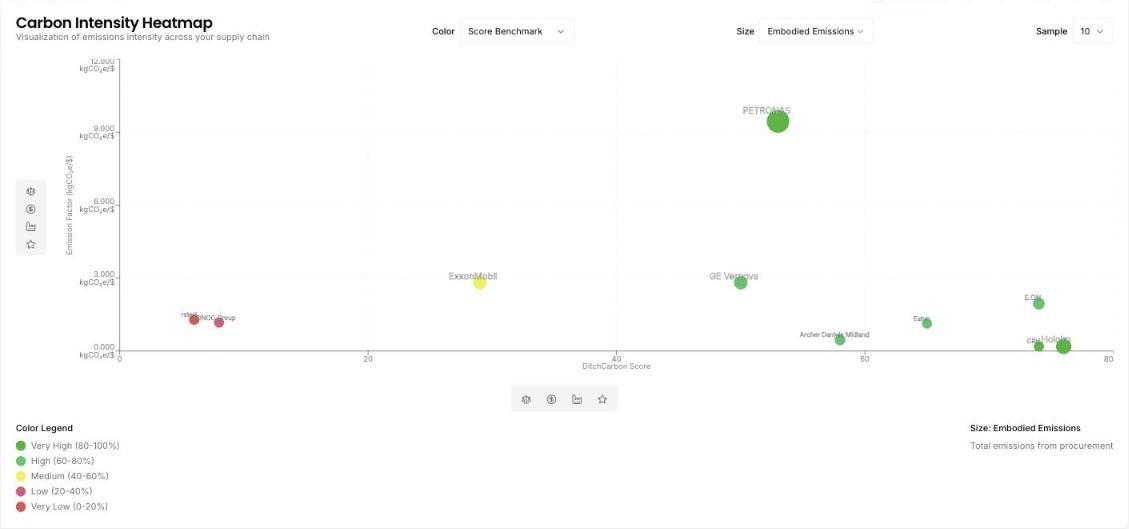
To the suppliers and categories where a change moves your total, which is rarely the order of your spend. DitchCarbon orders your suppliers by embodied emissions rather than invoice size, across six scope views, so a small invoice in a carbon intensive sector outranks a large one in a light sector. The carbon intensity heatmap then adds the second question: is the supplier doing anything about it. Emission factor on one axis, DitchCarbon score on the other, coloured by CDP disclosure or SBTi status and sized by the emissions it carries in your chain, so the high intensity, low maturity suppliers sit in one corner.
The ranked list of reduction actions turns that picture into a queue. Every supplier and emissions category is scored on the category embodied emissions it carries for you and the carbon reduction potential its peers have shown is achievable, and sorted by the share of your upstream total the action would move. That is usually a much shorter list than teams expect, and it is the order the conversations should happen in.
The old way: a spreadsheet sorted by spend and a guess about where to start.
The new way: a ranked list where every line names the supplier, the category and the tonnes it moves.
Which suppliers are already reducing, and how much of your target do they carry?
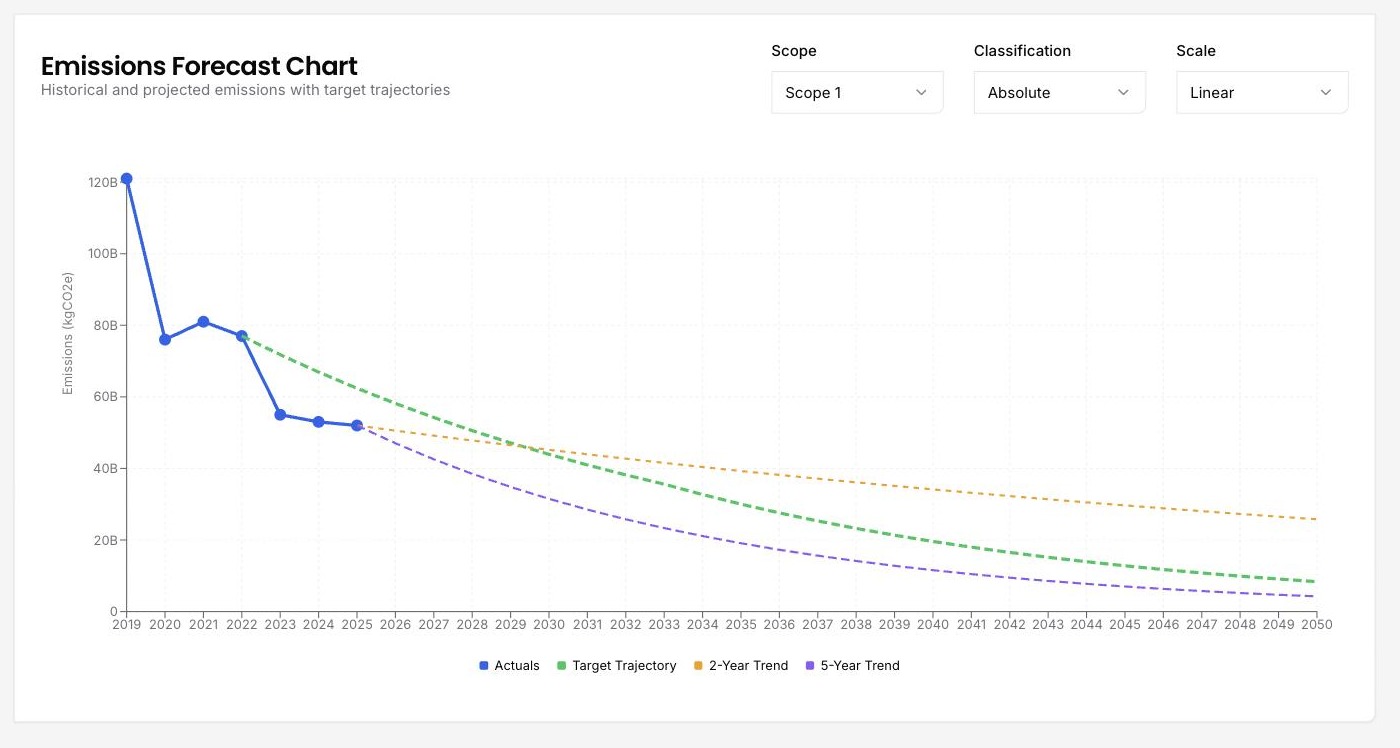
A good share of the suppliers on any list are already reducing, and the right move with them is to get out of the way. DitchCarbon forecasts each supplier's emissions forward from its reported history and plots that against the trajectory its own published target requires, so you can see the glide path it is on and whether the trend holds it. Roll those forecasts up to a category or the whole account and they show how far the reductions your suppliers are already making carry you towards your own target, and where the gap that still needs a conversation sits.
For a supplier on track, the ask is nothing. No survey, no new questionnaire, no request for a plan it has already published and is already delivering. Its reports are read as they are released, its case studies and goals update with them, and its progress flows into your forecast without anyone at the supplier lifting a finger. Every buyer running its own programme asks the same small sustainability team the same questions in a slightly different order, and any model that has to ask every supplier before it knows anything adds to that queue. Recognising who is already moving, and leaving them to it, is the part of Scope 3 decarbonisation that costs nothing and is most often missed.
The forecast is a projection rather than a measurement, and it carries a reliability notice where a supplier's disclosure is thin or inconsistent, with a link to the disclosure it was built from, so you know how much weight each line will bear.
The old way: a survey to every supplier, including the ones already ahead of you.
The new way: a forecast that shows who is on the way, and a queue with only the rest on it.

What do you say to a supplier about reducing its emissions?
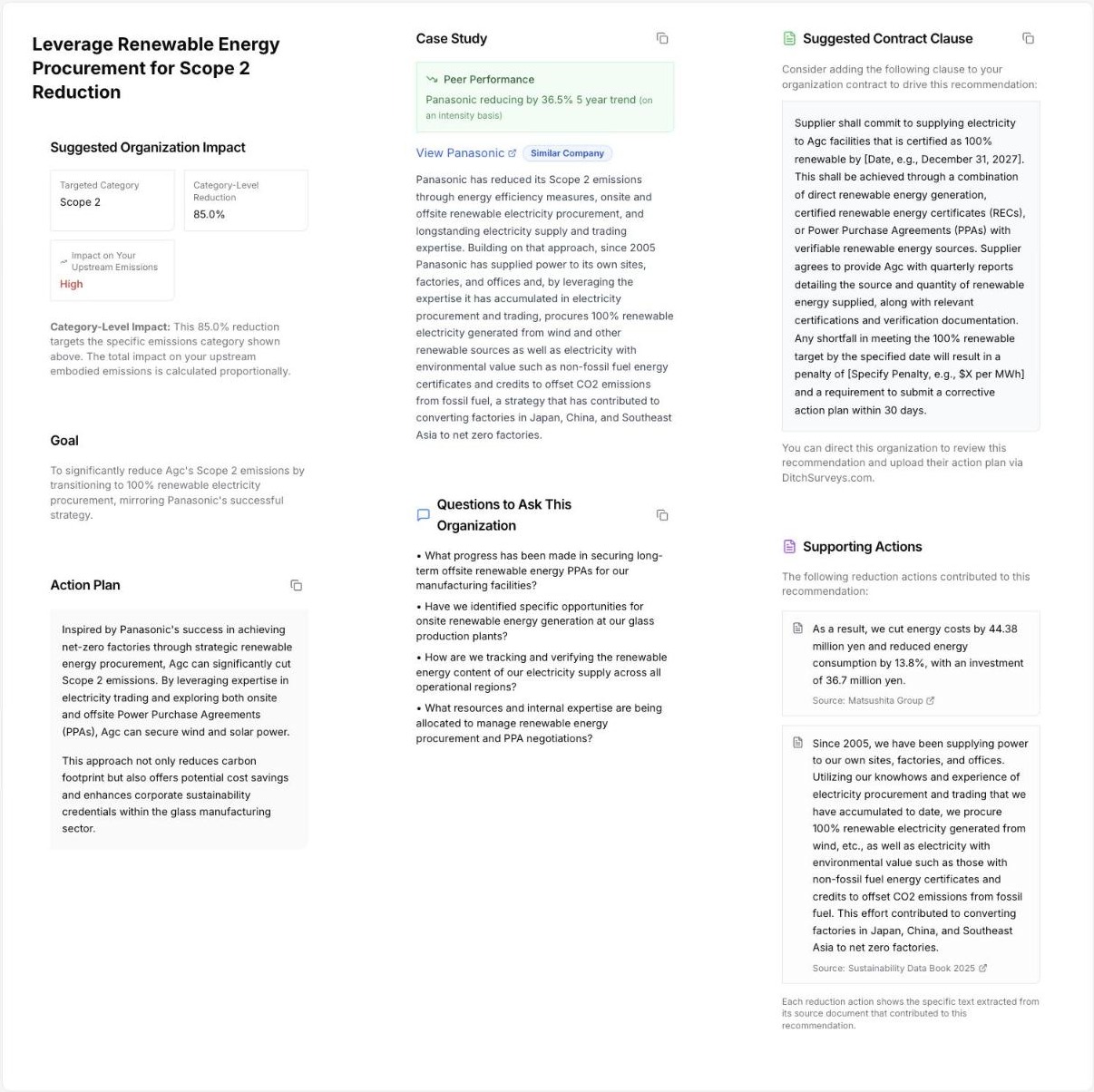
Open the recommendation and the conversation is already written. Each one starts from the supplier's own emissions in the category that matters, states the reduction that peers in its sector have achieved and the impact on your upstream total, and sets a goal for that supplier. Under it sits an action plan written for that supplier from what a named peer did, with the peer's trend over two or five years on an intensity basis and a badge saying whether it is a direct competitor or a similar company.
This is what makes the plan credible in the room. It is grounded in data that already exists, so no survey has gone out and nobody has been asked to fill in a form before the first meeting. It is built from a peer's own reports, and the sentences those reports contained are listed underneath with a link to each source document, so the supplier can check the precedent rather than take it on trust. Four questions to ask are written for the meeting, and every block has a copy button so the plan goes into a deck or an email without retyping.
A supplier told to reduce its Scope 2 emissions will agree and do nothing. A supplier shown that a direct competitor cut Scope 2 by moving to renewable procurement, with the figures and the document behind them, has a harder question to answer.
The old way: a target in an email and a supplier asking what you actually want.
The new way: a goal, a plan, the questions and the peer who already did it.
How does a recommendation become a commitment?
By putting it in the contract. Each recommendation carries a suggested clause with the commitment, a date, a reporting cadence and a shortfall remedy, with placeholders where the commercial terms belong, so the ask survives contact with the procurement process rather than living in a slide. The supplier can be pointed at the recommendation through DitchSurveys to review it and upload its own action plan, so the reply comes back to the place the ask was made.
Filter the list by project, industry, region, year, category or peer type, and export it as CSV so category managers work from the same queue. Where the same supplier appears in several categories, each line is its own action, because the ask that moves purchased goods and services is not the ask that moves business travel. This is the mechanism behind the third step of a sustainable sourcing strategy: climate in the contract, not only in the policy.
The old way: a decarbonisation expectation in a sourcing policy.
The new way: a clause in the supplier's contract with a date on it.
What has each supplier actually done to reduce already?
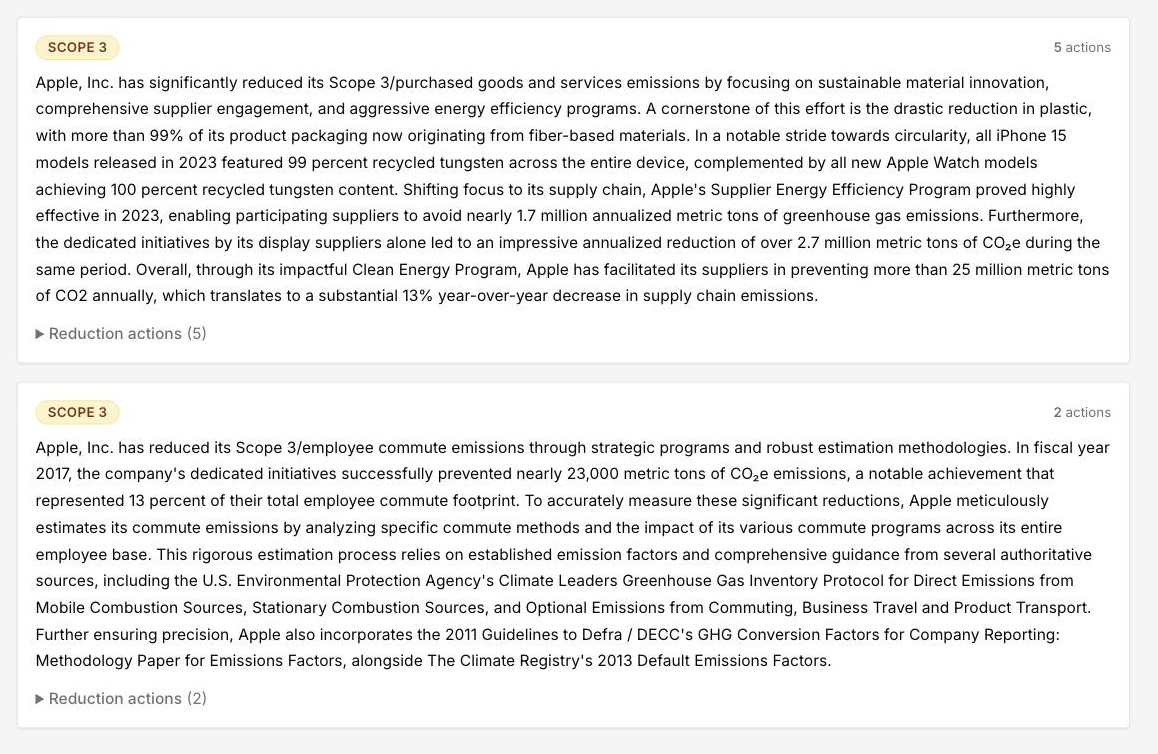
Open the supplier's case studies and read it per scope. Each one describes what the organisation has done in that scope, drawn from its own published reports, and lists the individual reduction actions underneath, each rated high, medium or low for impact and linked to the sentence in the source document. Alongside sit its published climate goals, quoted verbatim with a status against its reported emissions: on track, at risk or behind target.
That record does two jobs. Before the meeting it tells you whether the supplier has already done the thing you were about to ask for, so credit goes where it is due and the ask moves to the next category. After the meeting it is what progress gets measured against, because a new report from the supplier is read as it is published and the actions and goals update with it. The same reduction actions, across the whole database, are what build the plans for every other supplier in that sector.
The old way: what are you planning to do, and a slide about ambition.
The new way: what they already did, from their own report, and whether the target is being met.
If you are the supplier being asked
Your customers see the same record of what you have done and what you have committed to. Claim your profile to check it, correct it and answer once for everyone who asks.
Related articles



Frequently asked questions
Get answers to the questions climate-risk and sustainable-finance teams ask most often.
See the first conversations on your own suppliers
Send a sample of your supplier list. We show which of them carry the emissions, what their peers have already done about it, and what the first three conversations would be.