.svg)
Climate goals tracked against progress
DitchCarbon tracks each of an organisation's published climate goals against its actual emissions and marks whether the organisation is behind target or at risk.
Each published goal is held with its target year, its stated reduction and a status drawn from the organisation's own reported emissions, which is primary data under the GHG Protocol: behind target, at risk, or on track. The goal text is quoted verbatim from the document it came from, so the commitment being measured is the one the organisation made.
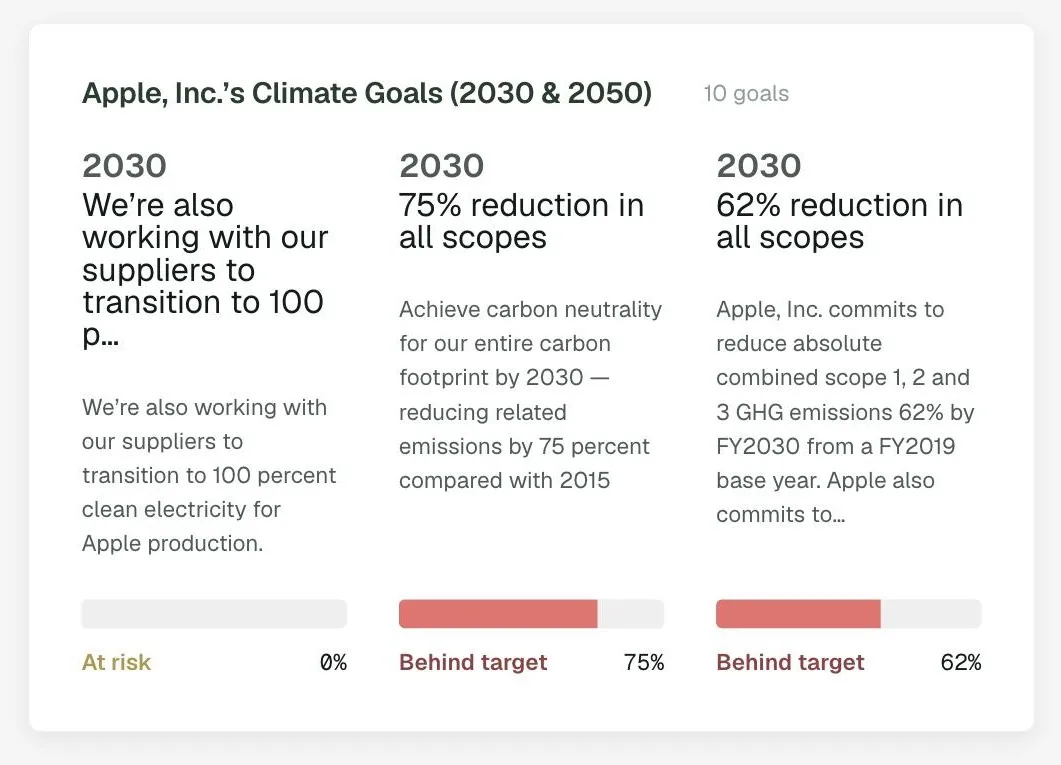
An announced target and a target being met are different facts, and only one of them belongs in a supplier review. Holding the goal next to the reported trajectory turns an announcement into a status.
Goals arrive from two kinds of source, and the difference matters. A validated science-based target carries the SBTi as its source. A commitment lifted from an annual report carries the document, with the wording preserved so the scope of the promise is not quietly widened.
Several goals usually coexist, sometimes overlapping and occasionally inconsistent, and all of them are shown rather than the most flattering one. Inactive and superseded targets can be brought into view when the history matters.
Common questions

See it on your own suppliers, portfolio or profile
Numbers you can defend within 2 weeks, or one profile that answers every buyer asking.