
Electricity
How do I decarbonise the electricity in my supply chain?
Start from the megawatt hours. DitchCarbon allocates each organisation's electricity to your spend, shows its low-carbon share against the local grid, and marks its Scope 2 target and RE100 status. Each organisation then gets one suggested action, from energy disclosure to renewable procurement, and the request goes out from the same screen.
Electricity is where supplier decarbonisation is most practical. The technology exists, the certificates and contracts exist, and a supplier's progress shows up in a number it already reports. What has been hard is seeing it across global supply chains: which suppliers, how many megawatt hours, on which grids.
The electricity tools follow Reduce because they take one reduction lever and make it operational. They rest on the same layer as the rest of the platform, verified emissions data for over 2 million organisations, built on primary emissions data wherever it exists, so a supplier's disclosed electricity is used wherever it has published it, and a modelled figure is marked as modelled.
From there the work passes to Engage. Suppliers ahead of their grid are recognised, suppliers with a target on track are left to carry on, and the requests that do go out ask each organisation for the one thing its own record shows is needed.
Which of my suppliers are already buying renewable electricity?
How do I give my customers our electricity and renewable figures?
How much electricity does this supplier use, and how much of it is low-carbon?
How do you estimate a supplier's electricity when it has not published it?
Which suppliers have a Scope 2 target, and are they on track?
What should I ask each supplier to do about its electricity?
Is this supplier's electricity cleaner than the grid it sits on?
Where should we plan energy attribute certificates or PPAs with suppliers?
How much electricity is in my supply chain, and where is it used?
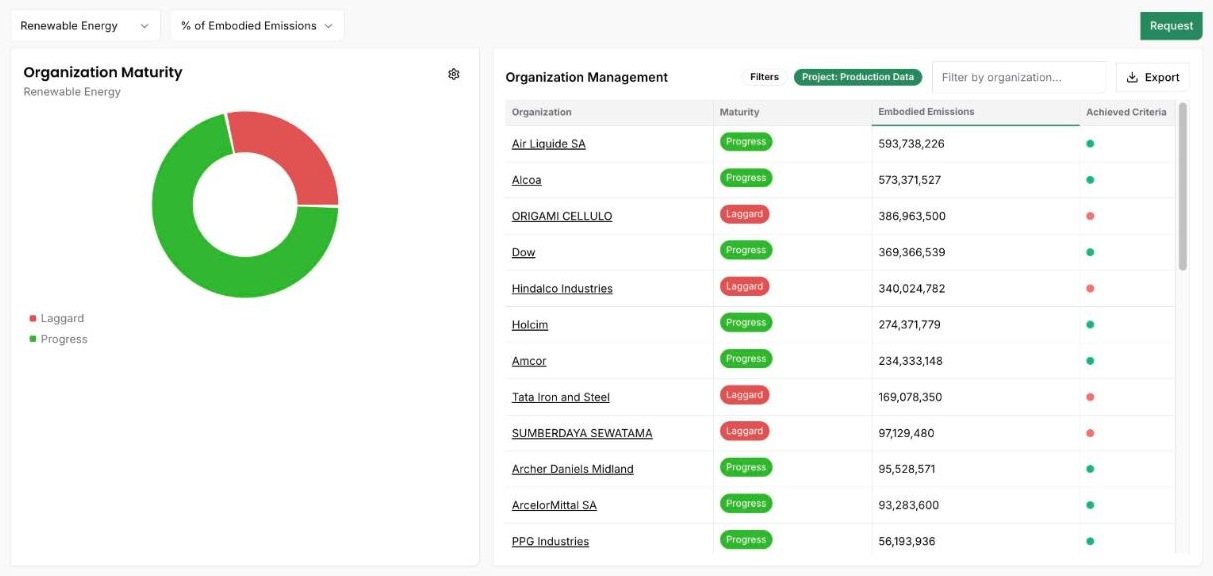
Renewable energy maturity view
Which of my suppliers are already buying renewable electricity?
Engage has a renewable energy view beside disclosing, reducing and setting targets. It sorts organisations into segments by the renewable energy criteria they meet, such as purchasing renewable energy credits, and weights each segment by embodied emissions, so a large supplier with no renewable procurement stands out. Criteria are configurable per project.
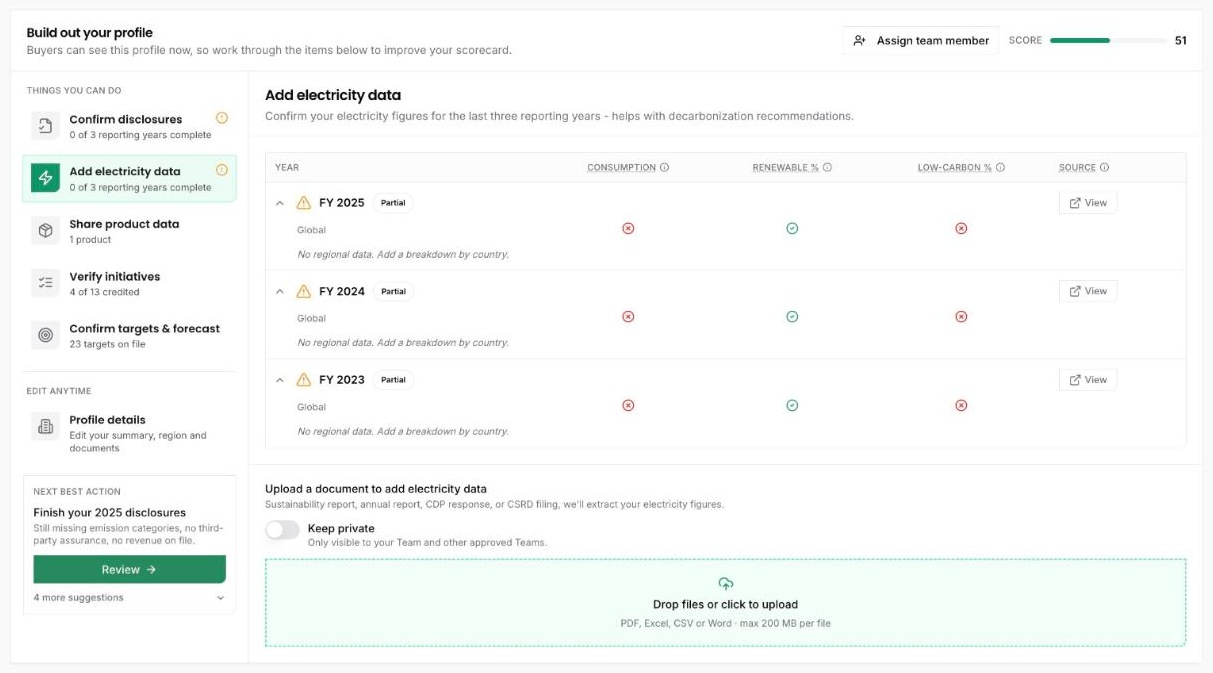
Add your electricity data once
How do I give my customers our electricity and renewable figures?
On your free DitchCarbon profile, the to-do list has an electricity step covering your last three reporting years: consumption, renewable share and low-carbon share. Upload a sustainability report, annual report, CDP response or CSRD filing and we extract the figures. Every customer that looks you up then reads the same answer.
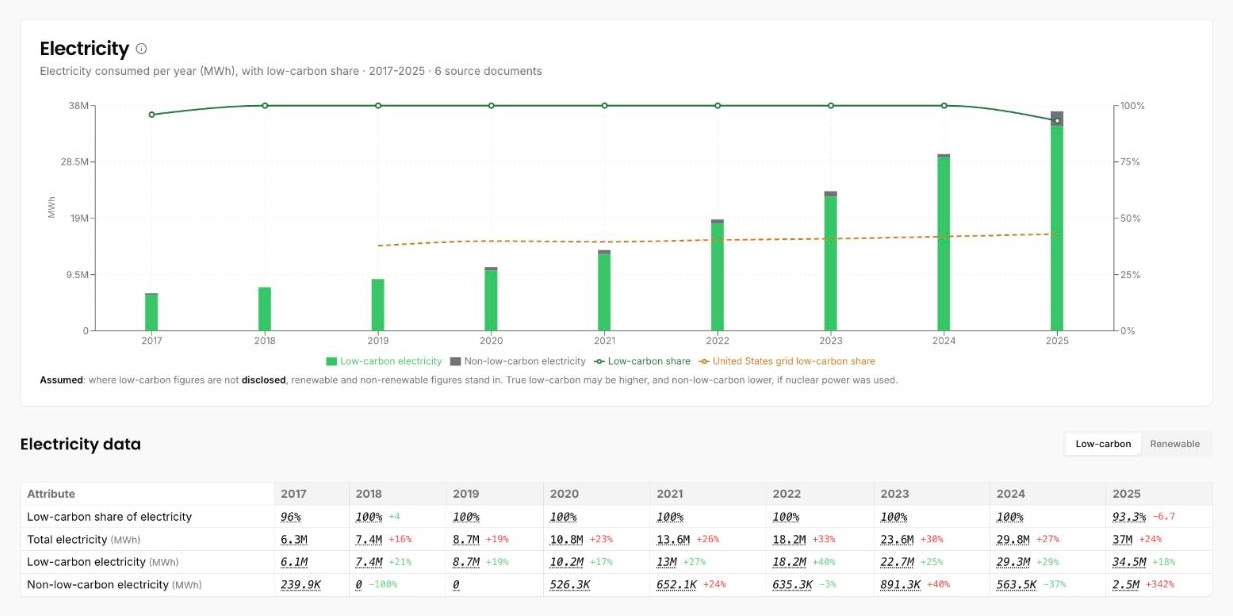
Electricity use and low-carbon share by year
How much electricity does this supplier use, and how much of it is low-carbon?
The Energy tab on each organisation's profile charts its electricity by year in megawatt hours, split into low-carbon and non-low-carbon, with its low-carbon and renewable shares plotted against the regional grid. Every value is marked disclosed, derived or assumed, and clicking it opens the source document at the page.
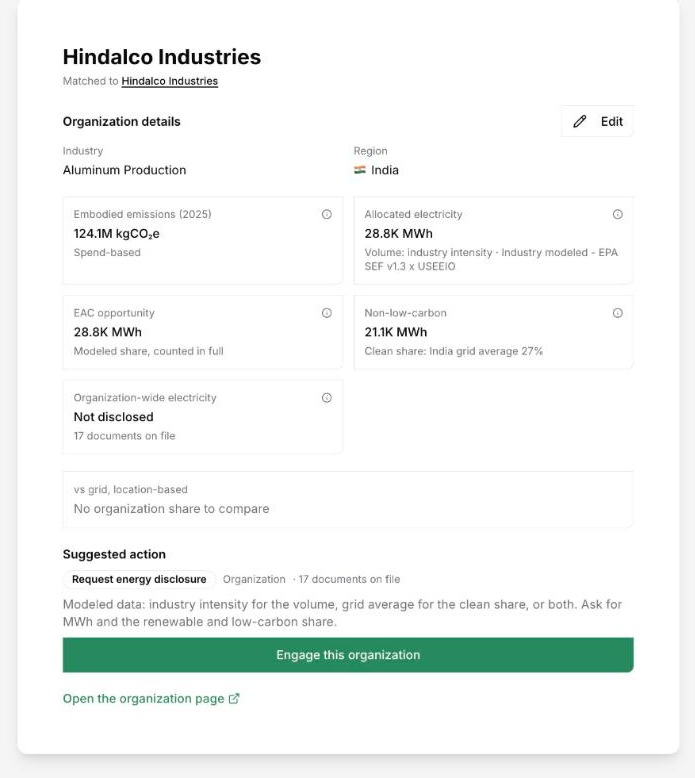
Supplier electricity estimated where it has not been disclosed
How do you estimate a supplier's electricity when it has not published it?
Where an organisation has disclosed its electricity, its own figures are used and allocated to your spend. Where it has not, the volume is modelled from your spend and the electricity intensity of its industry, and the low-carbon share from its regional grid. Every figure is marked organisation data or industry modelled.
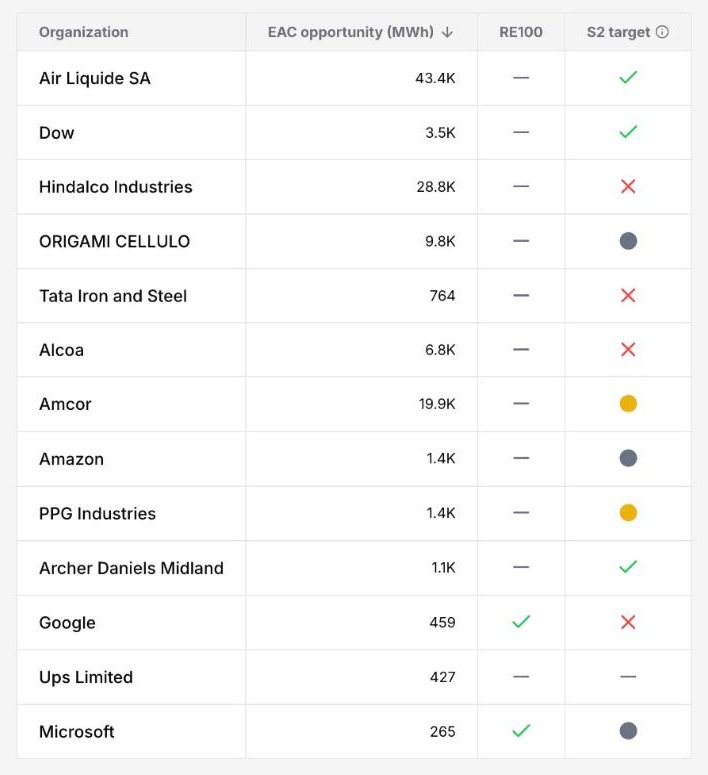
Supplier Scope 2 targets and RE100 membership
Which suppliers have a Scope 2 target, and are they on track?
Each organisation on the Energy Map shows its near-term Scope 2 target status, tested against its own two-year and five-year emissions trends: on track over both, on track over one, off track, too little data to judge, or no target. A separate column marks RE100 members, and a tile gives the share of electricity covered by targets.
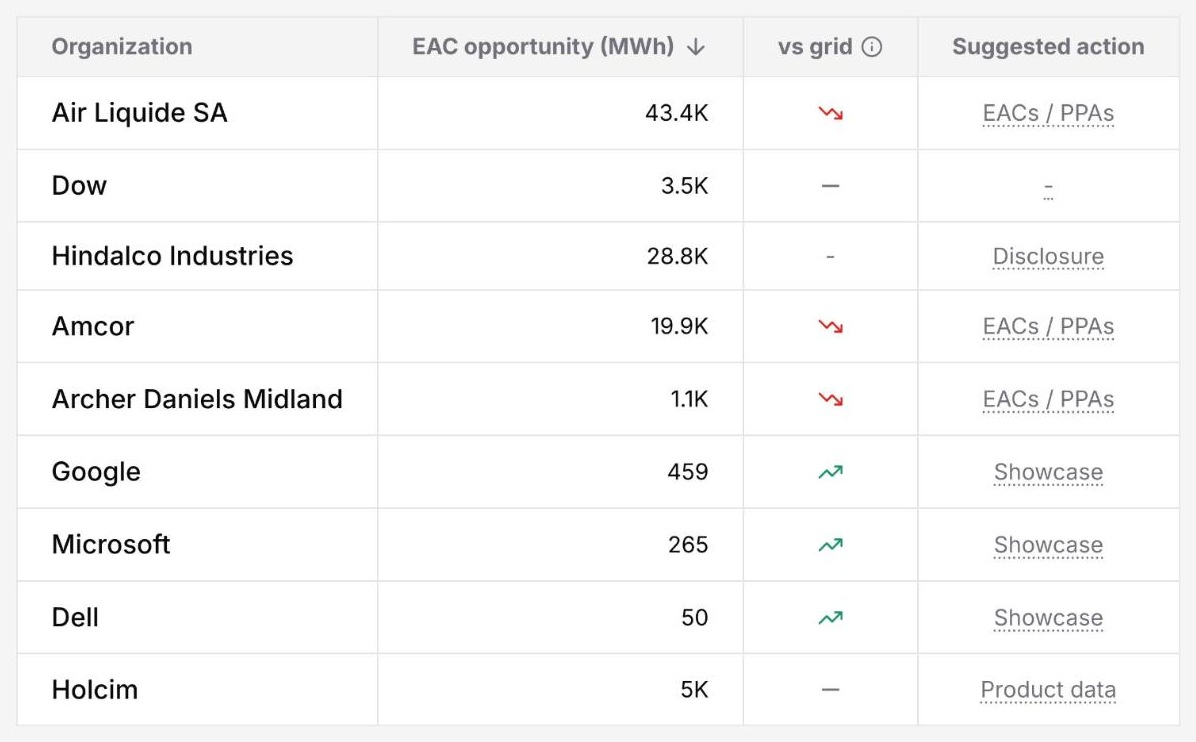
A suggested electricity action for every supplier
What should I ask each supplier to do about its electricity?
Every organisation on the Energy Map carries one suggested action, chosen from what it has disclosed and how its mix compares with its grid: request energy disclosure, ask for renewable procurement through EACs or a PPA, showcase as an example, request product electricity data, or no action. Select by action and send the request.
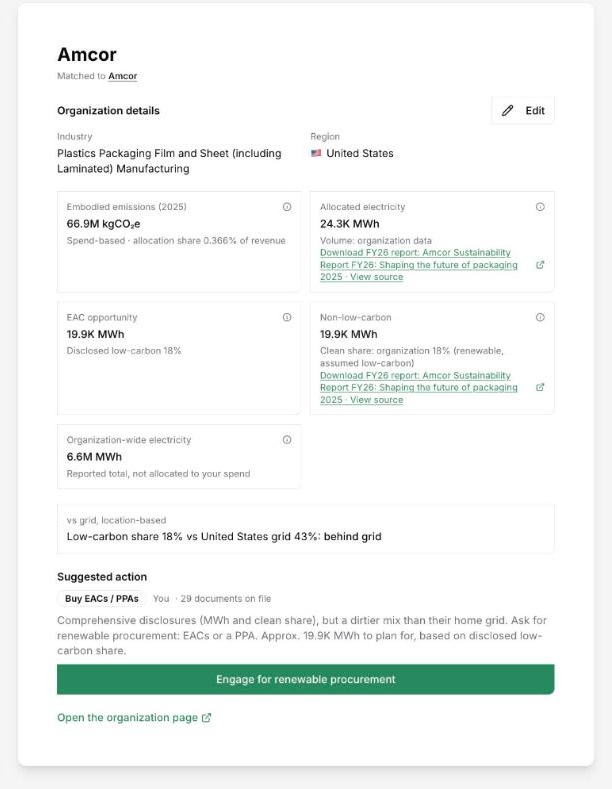
Supplier low-carbon electricity share against the local grid
Is this supplier's electricity cleaner than the grid it sits on?
Each organisation's disclosed low-carbon electricity share is set against the low-carbon share of its regional grid. More than ten points above is marked ahead of grid, more than ten below is marked behind, and anything between is at grid. The comparison is location-based and appears on the Energy Map and on the organisation's profile.
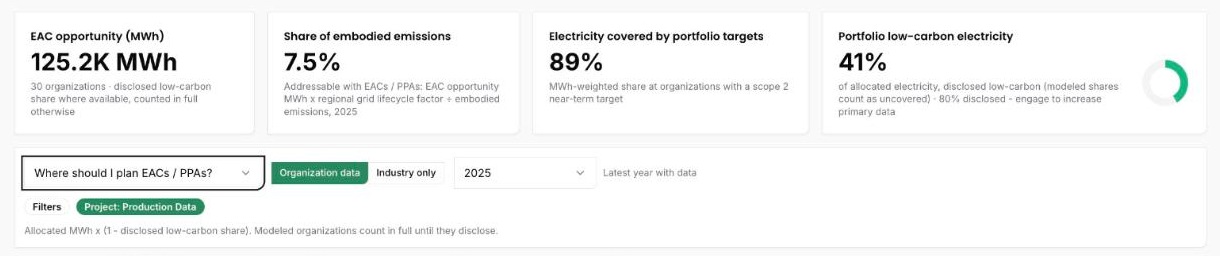
EAC and PPA opportunity across your suppliers
Where should we plan energy attribute certificates or PPAs with suppliers?
Choose the EAC and PPA view and the Energy Map counts each organisation's allocated electricity that is not yet low-carbon, using the low-carbon share the organisation has disclosed. The result is a megawatt hour figure per supplier and per country, with the share of your embodied emissions it represents.
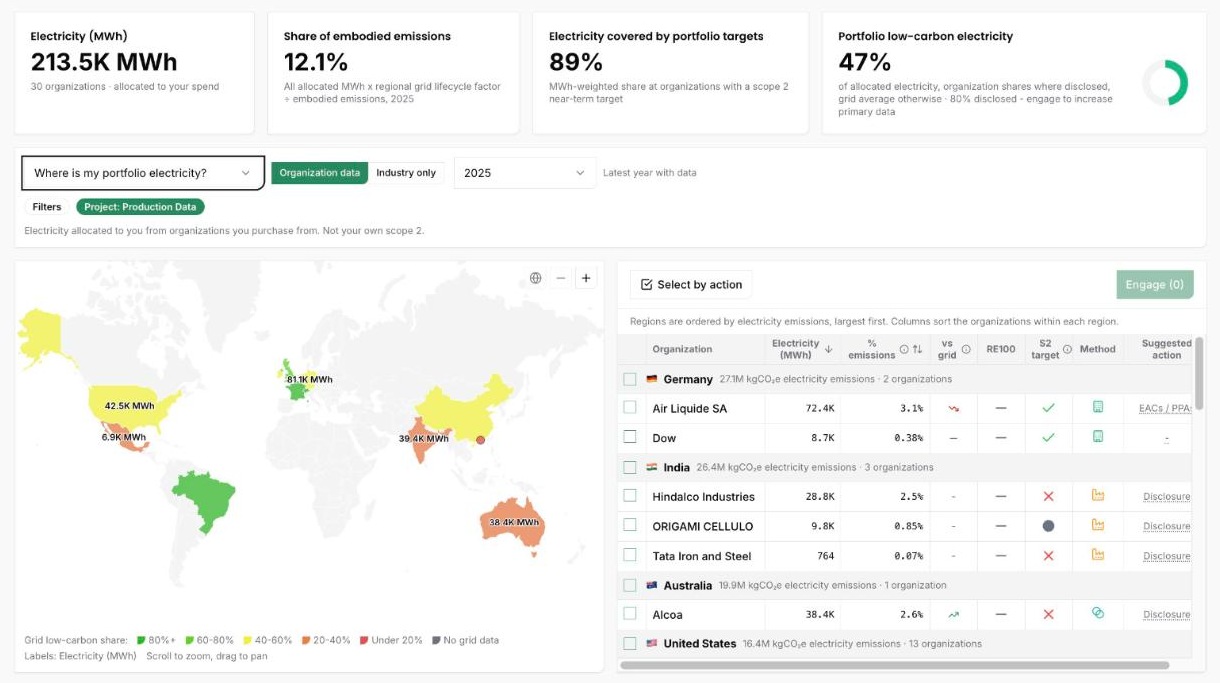
Supplier electricity map
How much electricity is in my supply chain, and where is it used?
The Energy Map allocates each organisation's electricity to your spend with it and plots the total by country. Every country is coloured by the low-carbon share of its grid, and the regions are ranked by electricity emissions, so the megawatt hours that carry the most carbon are the first thing you see.
See it on your own suppliers, portfolio or profile
Numbers you can defend within 2 weeks, or one profile that answers every buyer asking.


 Peer Insights
 by Scope 3 Peer Group
Ditch Carbon Ltd
167-169 Great Portland Street
London W1W 5PF
