
Supplier electricity estimated where it has not been disclosed
DitchCarbon uses an organisation's own disclosed electricity wherever it exists and models the rest from industry electricity intensity and regional grid averages, with the method marked on every figure.
Where an organisation has disclosed its electricity, its own figures are used and allocated to your spend. Where it has not, the volume is modelled from your spend and the electricity intensity of its industry, and the low-carbon share from its regional grid. Every figure is marked organisation data or industry modelled.
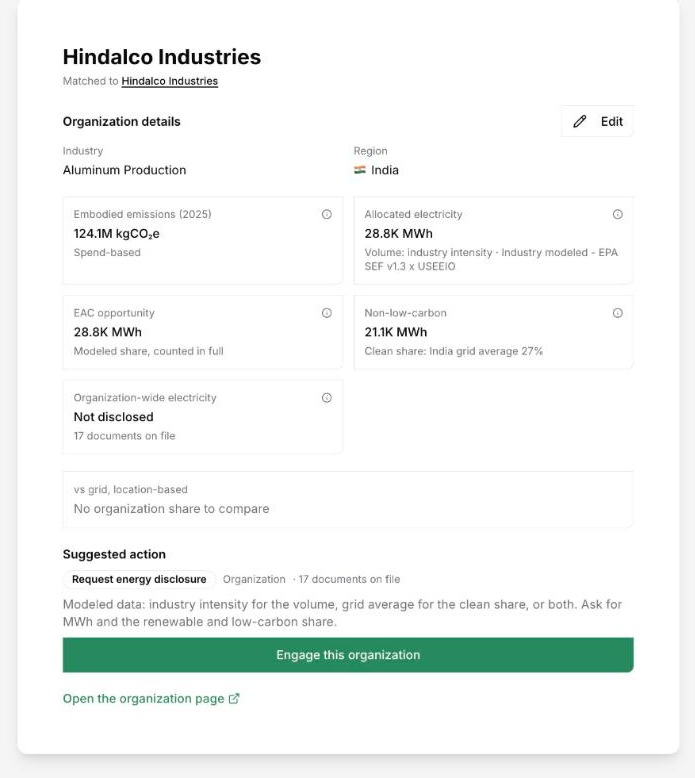
Supplier electricity disclosure is uneven, and a map that waited for it would be mostly blank. So every organisation gets a figure, and every figure says how it was reached.
The calculation follows the same order as the rest of the platform: primary data first. An organisation's disclosed megawatt hours and low-carbon share are used wherever they exist, allocated by your share of its revenue. Where the volume is not disclosed, it is your spend multiplied by the industry's electricity intensity per dollar, price-adjusted to the spend year. Where the clean share is not disclosed, the regional grid average stands in.
Each row carries a method marker, and the drawer names the basis for the volume and for the clean share separately, with a link to the source document where there is one. The portfolio tile states how much of the low-carbon figure rests on disclosure, which is the number engagement raises.
An industry only toggle recalculates the whole map from sector intensities and grid averages with every disclosure set aside. It shows the picture with no supplier data at all, and so how far the disclosures you already hold have moved it.
Common questions

See what is disclosed and what is modelled
Numbers you can defend within 2 weeks, or one profile that answers every buyer asking.


 Peer Insights
 by Scope 3 Peer Group
Ditch Carbon Ltd
167-169 Great Portland Street
London W1W 5PF
