
Electricity use and low-carbon share by year
DitchCarbon's organisation profile shows an organisation's electricity consumption by year in megawatt hours, split into low-carbon and non-low-carbon, with every value linked to the page of the document it came from.
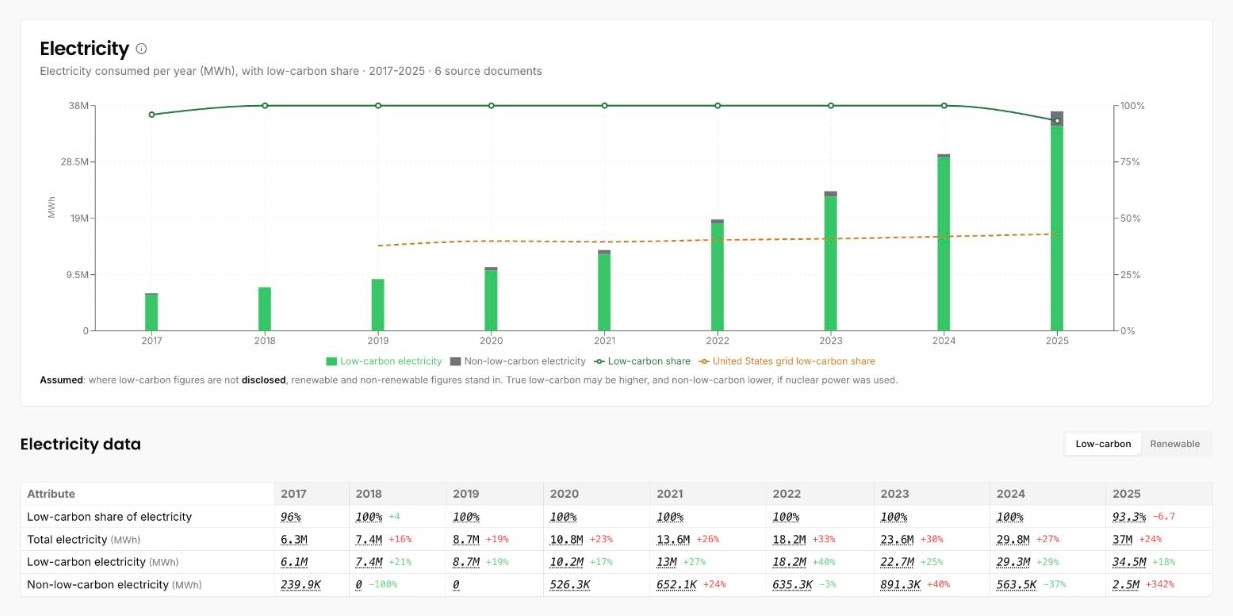
The Energy tab on each organisation's profile charts its electricity by year in megawatt hours, split into low-carbon and non-low-carbon, with its low-carbon and renewable shares plotted against the regional grid. Every value is marked disclosed, derived or assumed, and clicking it opens the source document at the page.
Electricity figures are scattered through sustainability reports in different units, under different headings, and often as a percentage with no total. Comparing two suppliers means reading both reports.
The Energy tab does the reading. Consumption is standardised to megawatt hours for each reporting year, with total, low-carbon and non-low-carbon electricity in a table beneath the chart and the year-on-year change beside each value. Switch the table between a low-carbon view and a renewable view.
Hover any value to see whether it was disclosed in the document, derived from other disclosed figures, or assumed. Click it and the source document opens at the page the figure was taken from, which is the check a category manager or an auditor will want to make.
The chart carries the regional grid's low-carbon share as a line across the same years, so the organisation's direction reads against the grid it operates on. The tab sits alongside the organisation's emissions, targets and source documents.
Common questions

Read any supplier's electricity by year
Numbers you can defend within 2 weeks, or one profile that answers every buyer asking.


 Peer Insights
 by Scope 3 Peer Group
Ditch Carbon Ltd
167-169 Great Portland Street
London W1W 5PF
