.svg)

Supplier engagement that asks each supplier for less
Rank the suppliers that carry your footprint, start with the primary emissions data they have published, and ask only where it is needed. A supplier list in the thousands, a sustainability team you can count on one hand, and a target that says engage them. The usual answer is a questionnaire to everyone and months of chasing. DitchCarbon starts the other way round: from verified emissions data for over 2 million organisations, built on primary emissions data wherever it exists, so the suppliers on your list who have already published are covered before you send a single request. What is left is a shorter list, a request each supplier can confirm rather than compile because it arrives already filled in, and a record that moves your inventory from sector averages to primary emissions data one line at a time.
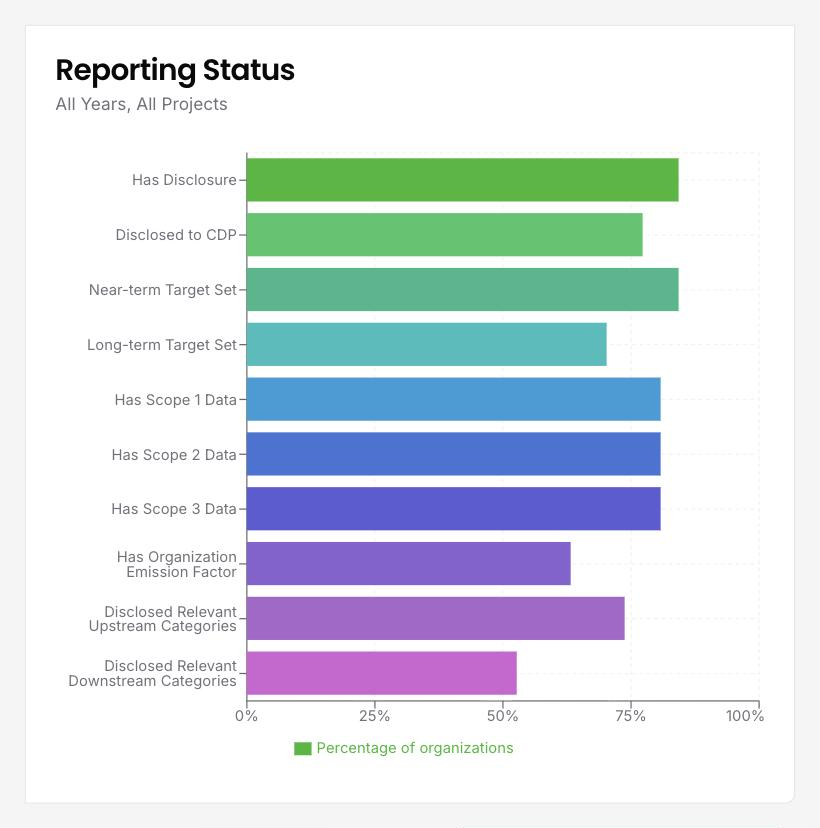

Primary emissions data on your suppliers before anyone is asked

Ranked by the emissions each supplier carries, not by spend

Requests prepopulated with what the supplier has already published

Energy, activity and product footprint data collected through the same request

A profile a supplier answers once, read by every buyer who asks
Explore this use case
How much of your supplier list already has emissions data?
More than most teams expect. A large share of any Category 1 list is made up of organisations that already publish a GHG inventory, a product carbon footprint or the activity data behind what they sell, and DitchCarbon holds that as supplier-specific (primary) emissions data before you ask anyone for anything. Upload a supplier export as it is and each supplier arrives with its own figure where one exists, reported by the supplier itself and allocated to your spend. That is primary data in the GHG Protocol's terms, and it is the rung most teams do not know is already available to them.
Every line shows which of four methods produced it: the supplier's own reported inventory, product data from a published footprint, activity data from what was consumed, or industry data where nothing better could be found. Industry data sits fourth of four and is the only secondary rung. The method is a filterable column, and the headline figure toggles between supplier-specific and industry factors, so the share of your inventory still resting on a sector average is a number you can read rather than a claim you have to take on trust.
The network widens what exists before you ask. Activity and product data that suppliers have already provided through DitchCarbon for other customers, and agreed to share, is available to you from day one. Sharing is always the supplier's decision, and a disclosure made privately for one customer is never shown to another.
The old way: a questionnaire to every supplier and a sector average against the ones who do not reply.
The new way: primary emissions data on the suppliers who have already published and a request only for the rest.
How to collect supplier emissions data · Supplier-specific emissions data · Emission factor method per organisation

Which suppliers should you actually engage?
The ones that carry your footprint and have not yet published or committed. DitchCarbon sorts your suppliers by the emissions each one carries in your chain rather than by invoice size, then places each on a four step maturity ladder: no data, disclosed, target set, SBTi validated. Read the two together and the engagement list writes itself. A high emissions supplier with no disclosure is the first conversation. A high emissions supplier with a validated target is already doing the work, and the right move is to leave it to carry on.
That turns a list of thousands of names into a short list you can work through. It also protects the relationship: a supplier that has already published its inventory and set a target does not get asked for either again, and the suppliers you do approach can see why they were chosen. The ask is proportionate to the emissions, and the suppliers that need a reduction conversation rather than a data request are handed to the Scope 3 decarbonisation plan with their peers' actions already written up.
Targeting is a choice, not a ceiling. Because the requests go out from the platform rather than from an inbox, and because whatever comes back is read into the same record whether it is a corrected figure, an uploaded report, a product carbon footprint or an EPD, the method works the same for 100 suppliers as for 10,000. Where the programme calls for the whole list, the whole list is engaged, and DitchCarbon runs supply chains of over 100,000 suppliers in production. Hotspotting decides where the conversations start; it does not limit how far they reach.
The old way: a top spend list and a survey to all of it.
The new way: a list ranked by emissions and maturity that starts with the suppliers that matter and runs as far as the programme needs, with the suppliers already on track left alone.
Scope 3 data collection across 5,000 or more suppliers · Top emitters rather than top spend · Top emitters


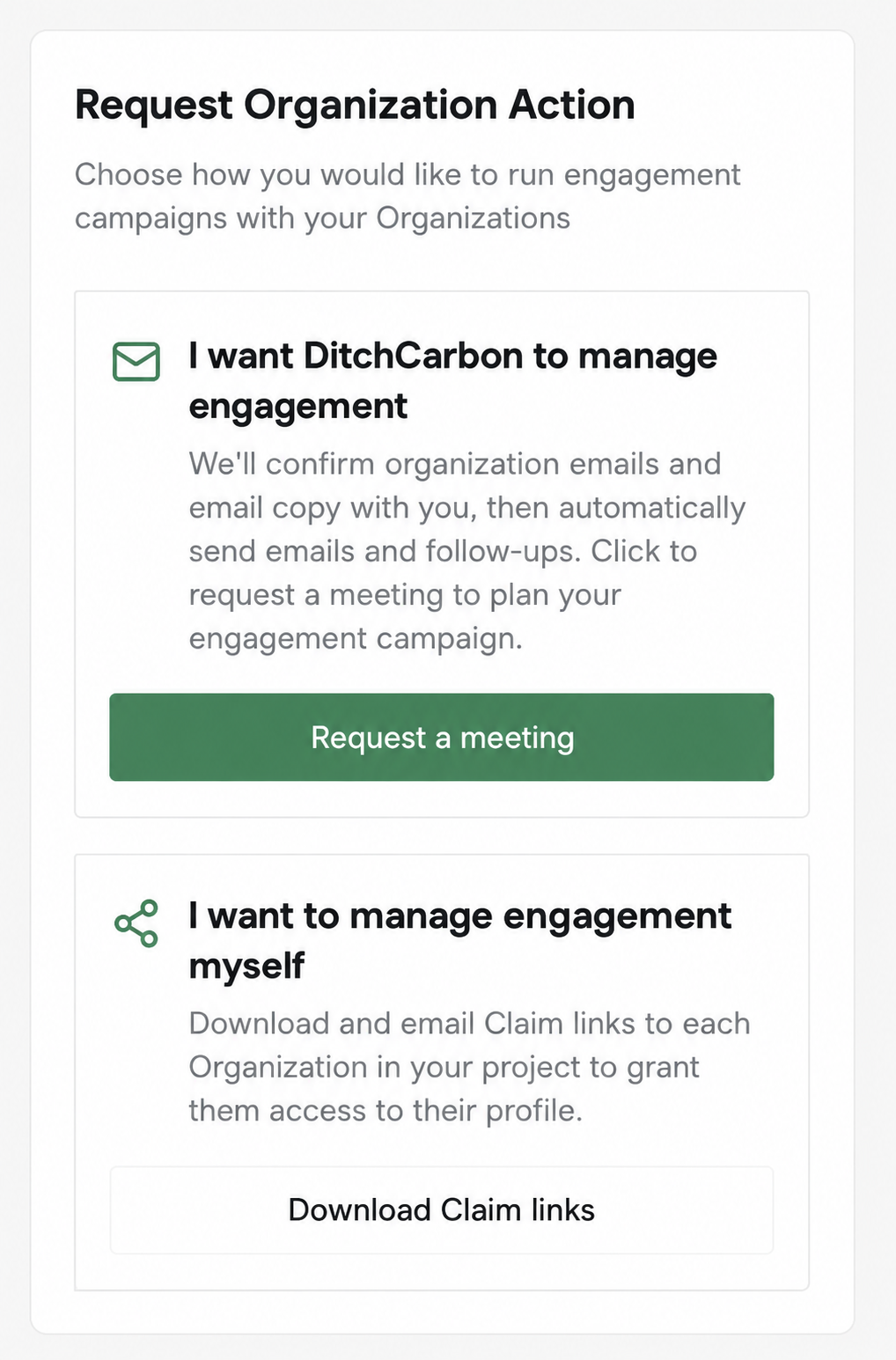
What does a supplier receive when you ask for data?
A request that is already filled in. It goes out from your portfolio view prepopulated with what the supplier has published, so the supplier reviews and corrects rather than compiles, and the ask is for what is missing at the level the line needs: a facility's energy consumption and renewable share, the activity data behind a purchase, or a product carbon footprint for a named item. A supplier's sustainability team is usually one or two people, and every customer running its own programme asks them the same questions in a slightly different order. A request that arrives with the answers already in it, and asks for one specific thing more, gets a better response than a blank questionnaire, because it is a smaller job.
The reply comes back to the place the ask was made. The supplier can upload its own documents, a product carbon footprint or an EPD, and an inbound footprint is graded on arrival: a quality band, whether the figure sits in the expected range, PACT alignment, and an assurance breakdown covering methodology, lifecycle boundary and third party verification. What passes enters the calculation through spend allocation. Each reply moves that line from a sector average to primary emissions data, and the method column records the move, so the improvement in your inventory is visible line by line rather than asserted at the end of the year.
The old way: a blank questionnaire, months of chasing and a spreadsheet of inconsistent answers.
The new way: a prefilled request, one specific ask and a graded reply that goes straight into the figure.
Why supplier surveys fail, and what to do instead · What it costs to collect supplier data by hand · Product carbon footprint data from suppliers
How do you track an SBTi supplier engagement target?
By measuring coverage the way the target is written. Under the SBTi's criteria a supplier engagement target commits a set share of suppliers, by spend or by emissions, to have science based targets in place within five years. DitchCarbon's SBTi progress view shows the share of your suppliers with a target, weighted by count, by spend or by the emissions they carry, and the three weightings give different answers, which is why the view shows all of them. The SBTi dataset behind it is snapshotted weekly, and each supplier's status is separated into validated, committed and self declared, so the figure you report is the one the criteria ask for.
The forecast sits alongside it. Each supplier's emissions are projected forward from its reported history against the trajectory its own target requires, and rolled up to the category or the whole account, so you can see how far the reductions your suppliers are already making carry you towards your own target and where the gap that still needs a conversation sits. The forecast is a projection rather than a measurement, and it carries a reliability notice where a supplier's disclosure is thin.
The old way: a percentage of suppliers engaged, counted by hand from a survey tracker.
The new way: a coverage figure weighted the way the target is written and refreshed as suppliers publish.
SBTi supplier engagement targets · Supplier engagement checklist for SBTi validation · SBTi progress tracking

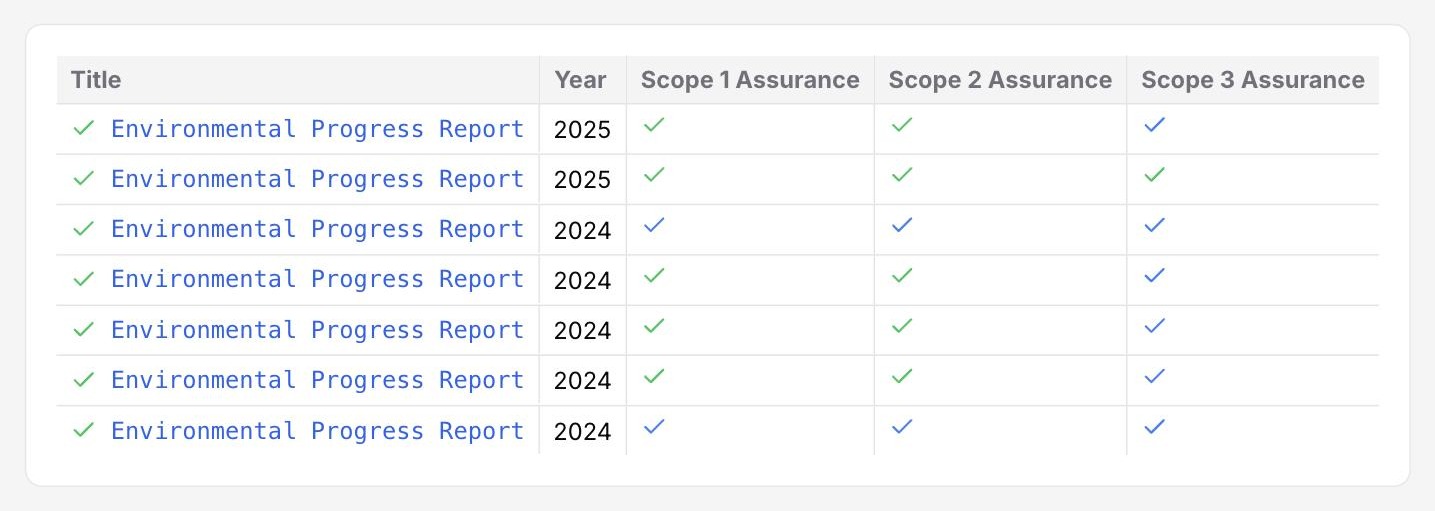
Will your auditor accept supplier data collected this way?
They can follow every figure to its source. Each supplier record carries the document the number came from, the sentence in it, the method that produced the figure and the change history since, so a sampled line can be traced by someone who has never opened the platform. Data capture is annually assured by UL Solutions, and the calculator the figures run through is verified to ISO 14064-3, limited assurance, by UL Solutions, renewed annually. The verification covers the calculation and the capture; the maturity ladder and the forecast are judgement and projection, and are described as such.
The data has already been through that test. DitchCarbon data has been used in emissions reports that were subsequently assured by ten different third party assurance providers, including Big Four firms, and it is used by Fortune 100 companies in their sustainability reports. The documents behind the verification are in the trust centre.
The old way: a spreadsheet of survey answers with no trail behind them.
The new way: a figure per supplier with the source document, the method and the assurance level shown.
Numbers you can defend within 2 weeks · Trust centre
If you are the supplier being asked
Your customers see the same record of what you have published and what you have committed to. Claim your profile to check it and correct it, answer once, and every customer who asks reads the same answer. What you share for one customer alone stays with that customer.
Related articles





Frequently asked questions
Get answers to the questions climate-risk and sustainable-finance teams ask most often.
See coverage on a sample of your own suppliers
Send a sample of your supplier list. We show which already carry primary emissions data, which are still on a sector average and need a request, and what that request would say.