.svg)
Reduction case studies from published reports
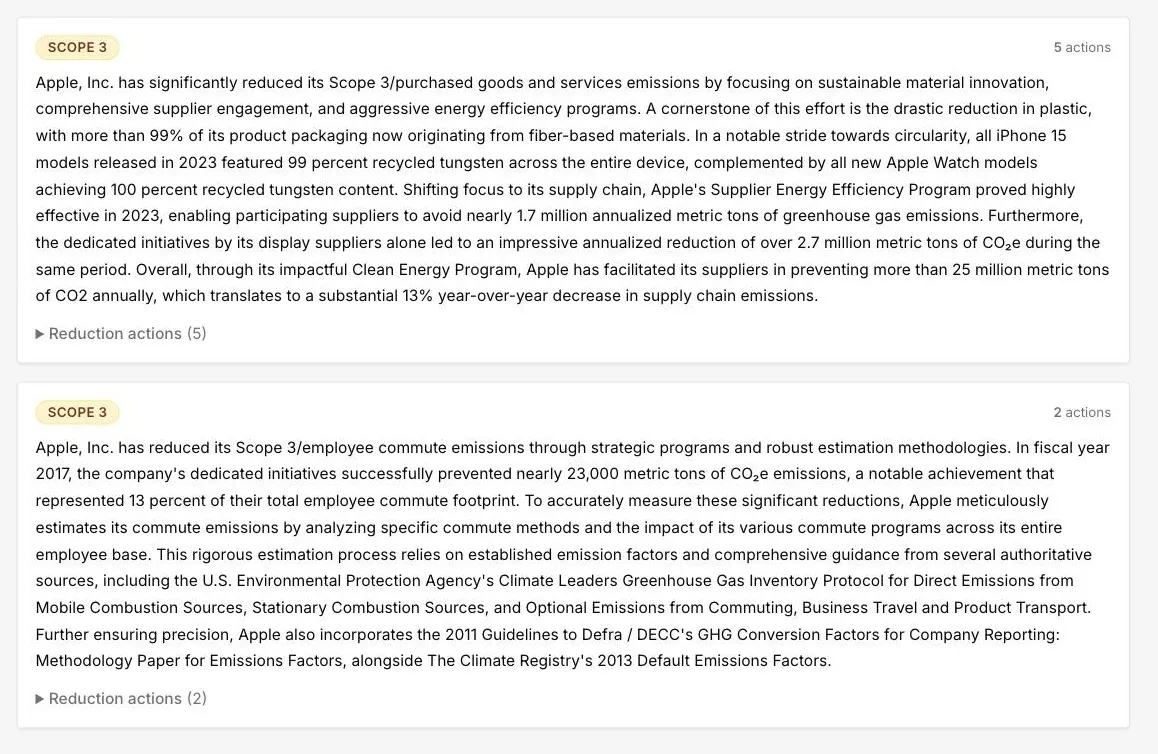
DitchCarbon assembles case studies of how an organisation has already reduced emissions in each scope, drawn from its own published reports, with the individual actions listed underneath.
Read it per scope. Each case study describes what an organisation actually did, drawn from its own published reports, and lists the individual reduction actions behind it, each rated high, medium or low for impact and linked to the sentence in the source document. It covers what worked, with the organisation's own figures, rather than a statement of intent.
Supplier engagement usually opens by asking what an organisation plans to do. Opening instead with what it has already done changes the register of the conversation and gives credit for work the organisation has already paid for.
The case studies are per scope, because a supplier strong on Scope 2 through renewable procurement may have done nothing about upstream transport, and one number hides that.
Everything comes from the organisation's own published material, so the detail is specific: the programmes, the methodologies used to measure them, and the sources those methodologies came from. Each action underneath carries an impact rating, the extracted sentence and a link to the document, and can be edited or removed. A case study shows a processing badge while a newly found report is being read, so the record stays current as the organisation publishes.
For a procurement team the immediate use is a QBR. A case study drawn from the supplier's own report is a starting point they cannot dispute, and the reduction actions listed underneath are the shortlist of what to ask them to extend. These same actions are what build the supplier reduction plans for organisations in the same sector.
Common questions

See it on your own suppliers, portfolio or profile
Numbers you can defend within 2 weeks, or one profile that answers every buyer asking.