.svg)
Peer intelligence
DitchCarbon compares an organisation against named peers and turns what those peers achieved into specific actions the organisation could take, with an estimated reduction and the source behind each.
Ask for what a peer already did. Each recommendation names a comparable organisation, the scope or Scope 3 category it cut, the reduction it achieved on a two or five year trend, and the specific action behind it, with an estimated reduction and an impact rating for the organisation in front of you.
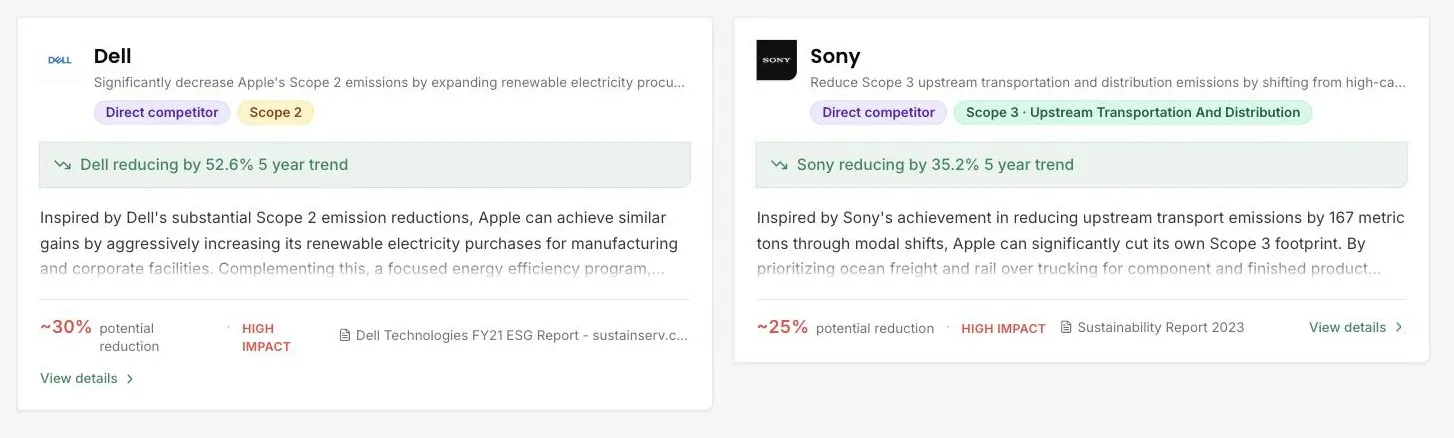
Generic advice does not survive a supplier conversation. An organisation told to reduce its Scope 2 emissions will agree and do nothing. An organisation shown that a direct competitor cut Scope 2 by expanding renewable electricity procurement, with the reduction quantified and the source named, has a harder question to answer.
Peers are split into direct competitors and similar companies, and the set is editable, because the peer group a category manager recognises is not always the one an industry classification produces.
Every recommendation carries the document it was drawn from, usually the peer's own sustainability report or assurance statement. That is what makes it quotable in a supplier review rather than an assertion.
Recommendations can be filtered by scope, so a conversation about upstream transport does not arrive mixed in with one about grid electricity.
Common questions

See it on your own suppliers, portfolio or profile
Numbers you can defend within 2 weeks, or one profile that answers every buyer asking.