.svg)
Disclosure coverage
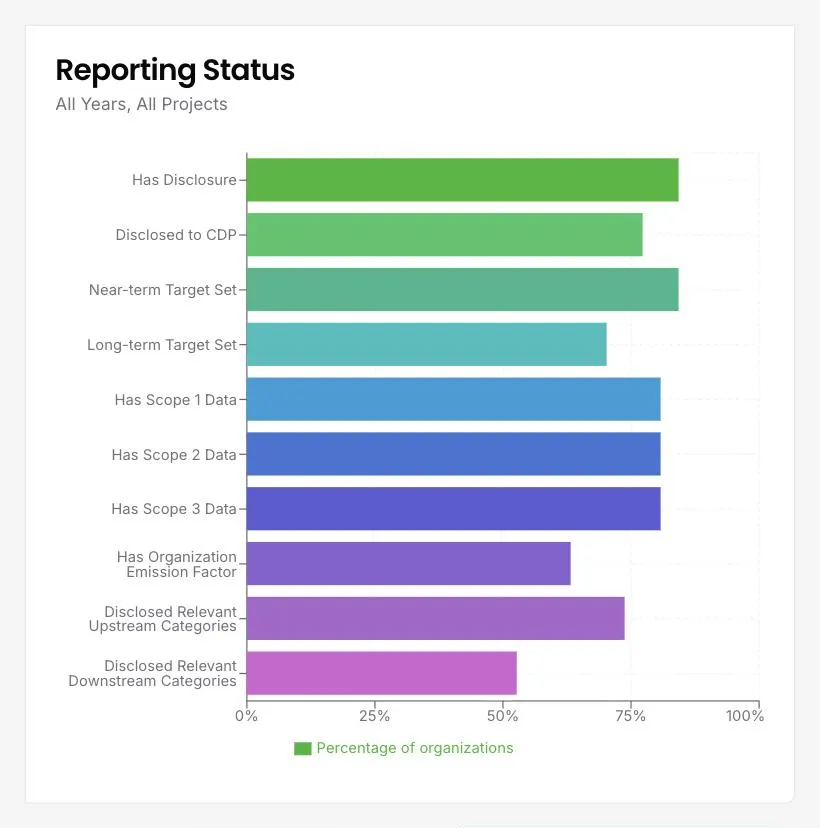
DitchCarbon's disclosure coverage view shows what proportion of the organisations in a portfolio publish emissions data, set targets and disclose to CDP, across ten measures.
Ten measures across the whole portfolio, each as a percentage of organisations: whether they have a disclosure at all, whether they disclosed to CDP, whether near-term and long-term targets are set, whether Scope 1, 2 and 3 data exists, and whether relevant upstream and downstream categories are disclosed.
Most teams discover their disclosure coverage one organisation at a time, usually while chasing a survey response. This is the whole portfolio at once, without asking anyone for anything.
Coverage gaps are shown, not hidden. A portfolio with a known shape is one you can act on, and the thin bars are the list of who to engage first.
It also answers the question that arrives immediately after a baseline lands. Not what is my number, but how much of it rests on organisations that publish nothing. The bars answer that without a spreadsheet exercise.
For a procurement team the practical use is prioritisation. An organisation with no disclosure and material spend is a different conversation from one that already reports to CDP with targets set. The measures update as organisations publish, with documented sources.
Common questions

See it on your own suppliers, portfolio or profile
Numbers you can defend within 2 weeks, or one profile that answers every buyer asking.