.svg)
Transparent scorecard breakdown
DitchCarbon shows every criterion behind an organisation's scorecard, with the weight applied, the points earned out of the points available, the source consulted and the value found.
Criterion by criterion. Six groups cover industry, region, reporting, initiatives, reductions and reporting quality. Each row names the criterion, its weight, the points earned out of those available, the source consulted and the value found, for example a CDP database check returning disclosed. Filter to earned or unearned criteria.
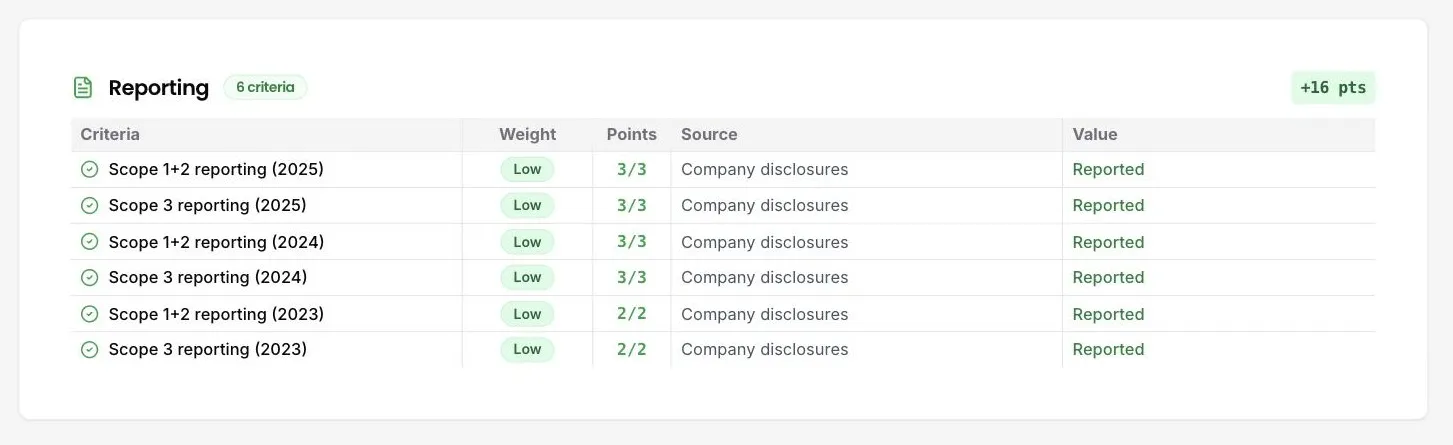
A score a supplier cannot interrogate is a score they will argue with. Showing the criteria removes the argument: an organisation on 42 can see which rows scored zero and what evidence would change them.
The sources are named per row rather than in aggregate. An SBTi database lookup, a CDP response, a company disclosure and an assurance verification are different kinds of evidence, and the row says which one produced the value.
Filtering to unearned criteria turns the scorecard into an engagement list. Those rows are the specific, checkable things to ask an organisation for, rather than a general request to improve.
The published methodology sets out the groups and the weightings, so the score can be reconciled against it rather than taken on trust.
Common questions

See it on your own suppliers, portfolio or profile
Numbers you can defend within 2 weeks, or one profile that answers every buyer asking.